Swap the Subdivision for Something Real: What Life in Toomsboro Actually Feels Like
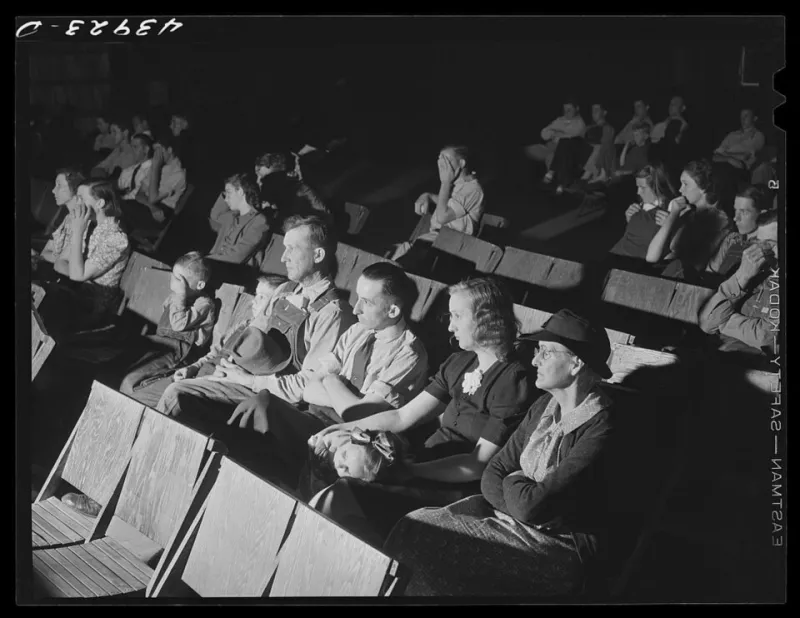
Photo: The Library of Congress, No restrictions, via Wikimedia Commons
At some point, the subdivision stops feeling like a neighborhood and starts feeling like a set. The houses look alike. The commute is a grind. The HOA has opinions about your mailbox. You're not unhappy, exactly — but you're aware of a low-level hum of dissatisfaction that doesn't go away after a vacation or a home renovation project.
If that description lands closer to home than you'd like to admit, you're not alone. And you're probably not the only person who's started quietly Googling small towns in Georgia.
Toomsboro isn't a cure-all. No place is. But it represents a genuinely different model of living — one that solves several specific problems that suburban life tends to create, while introducing a different set of tradeoffs worth understanding honestly.
The Suburban Burnout Problem Is Real
Let's name what we're actually talking about. Suburban burnout isn't about hating your neighbors or rejecting comfort. It's about a growing sense that the lifestyle you built — or inherited by default — isn't returning what you put into it.
Research consistently shows that long commutes are among the most reliable predictors of life dissatisfaction. Suburban sprawl, by design, makes car dependency nearly total, which means your time and mental energy are perpetually taxed by travel. Add in the financial pressure of keeping up with a neighborhood where status is measured in kitchen renovations and late-model SUVs, and the cumulative weight becomes genuinely heavy.
The irony is that many of the things people move to the suburbs for — space, safety, community, a good place to raise kids — are available in small towns, often in greater abundance, without the infrastructure that makes suburban life so exhausting.
What Toomsboro Actually Offers
Toomsboro is a small town in Wilkinson County, Georgia, with a population that fits comfortably inside a large suburban high school. That size is a feature for the people it's right for.
When you live in a town this scale, you know your neighbors — not in the abstract sense of nodding at them by the mailbox, but actually knowing them. You see the same faces at the local diner, at community events, at the hardware store. Over time, that repetition builds something that suburban life rarely generates organically: a genuine sense of belonging.
"I lived in the suburbs of Atlanta for twelve years and never really knew anyone on my street," says one Toomsboro homeowner who relocated with her husband three years ago. "Here, I knew half the town within six months. It sounds like a cliché until you actually experience it."
That social texture matters more than most people realize when they're evaluating a move. We tend to focus on square footage, school ratings, and commute times — the measurable things. But the quality of your daily social environment has an enormous effect on wellbeing that doesn't show up on any real estate listing.
The Cost of Living Difference Is Genuinely Transformative
Here's something concrete: the average home price in Toomsboro is a fraction of what comparable square footage costs in Atlanta's suburbs or even in mid-size Georgia cities. For many buyers, that gap doesn't just mean a lower mortgage payment — it means a fundamentally different financial life.
Consider what becomes possible when your housing costs drop by $800 or $1,000 a month. You might pay off debt. You might work fewer hours. You might start a business, fund your kids' education without loans, or simply have the breathing room to make deliberate choices rather than reactive ones. That's not a minor quality-of-life upgrade. For a lot of families, it's life-changing.
The lower cost of living extends beyond housing, too. Property taxes in Wilkinson County are modest. Local services — when you need them — tend to cost less than their urban equivalents. And the absence of the social pressure to spend that pervades status-conscious suburban environments is, for many people, an enormous relief.
Walkability Looks Different Here — But It Exists
When urban planners talk about walkability, they usually mean dense mixed-use neighborhoods where you can grab a coffee, hit the gym, and run errands without a car. Toomsboro isn't that, and it's worth being honest about it.
But small-town walkability has its own character. The historic downtown core is compact enough that residents can genuinely walk between points of daily life — the post office, local businesses, community gathering spots. More importantly, the scale of the town means you're never far from open space, from neighbors, or from the kind of informal street-level interaction that makes a place feel alive.
For families with kids, that pedestrian scale has real value. Children can develop a degree of independence and spatial confidence that's nearly impossible in car-dependent suburban environments where every trip requires a parent behind the wheel.
The Tradeoffs Are Real — Here's How to Evaluate Them
Intellectual honesty requires acknowledging what Toomsboro doesn't have. The restaurant selection is limited. Certain specialty services require a drive to Macon or beyond. If your social life depends on a dense urban cultural scene, a town this size will feel constraining.
The people who thrive here tend to share a few characteristics: they're genuinely comfortable with a quieter pace; they find satisfaction in building relationships over time rather than seeking constant novelty; and they've made a conscious decision about what they're trading — urban convenience for something they've decided matters more.
Before making any move of this magnitude, ask yourself a few honest questions. Do you actually use the urban amenities you currently have access to, or do you mostly just like knowing they're there? Are your closest friendships tied to geography, or would they survive a move? Does the idea of knowing your neighbors excite you or exhaust you?
Your answers will tell you more than any real estate listing can.
Authenticity Over Aesthetics
There's a particular kind of buyer who finds their way to Toomsboro — not because it's perfect, but because it's real. The town has history, character, and a community that hasn't been engineered by a developer's marketing team. The streets aren't named after the ecosystem that was cleared to build them. The neighbors aren't strangers performing friendliness.
For the right person, that authenticity is worth more than granite countertops and a three-car garage. It's the thing that suburban life, for all its comfort, often fails to deliver.
If you're tired of optimizing a lifestyle that doesn't quite fit, Toomsboro might be worth a closer look. Not as an escape from real life — but as a path toward a version of it that actually suits you.
Ready to explore what's available? Browse Toomsboro listings and get a feel for the market at toomsboroforsale.com.